
Tracing Former Owners of a Mineral County Property
Start from a parcel you can identify today. Then work through the Clerk's deed index and older finding aids. The county states no online cutoff year. Officials publish no year ranges for the physical deed books either. Known access points stand apart from year spans that still need confirmation.
| Source | Years It Covers | Where Held | What It Shows |
|---|---|---|---|
| WV Land Records index | Start year not located | Mineral County Clerk portal | Recorded land-document categories and party search once coverage is confirmed |
| Deed books and indexes | Exact year runs not located | County Clerk courthouse | Older grantor-grantee entries and recorded instruments |
| 1875 land sketch and 1941 inventory | 1875 map; 1941 survey | West Virginia Archives | Finding aids for historic land and county records |
| Newspaper microfilm | 1876 fragments onward; title runs vary | WV Archives and Potomac State collections | Address, sale, estate, and neighborhood clues |
| Probate files | Index coverage not located | Mineral County Clerk | Wills, representatives, settlements, and estate transfers |
Use the web index first. It anchors the newest link in the chain. Ask the Mineral County Clerk where that coverage ends before jumping to older books. Older or unclear street names call for different tools. Archives maps, plats, probate records, and newspapers can identify the right deed book, and official histories record no Mineral County courthouse fire or destroyed deed decade.
Mineral County Name Changes Can Break a Chain
Each backward step looks for the prior grantor as an earlier grantee. Names can change, though. Marriage, estates, trusts, and entity filings all alter how an owner of record appears in the deed index. Keep spelling and initials exactly as indexed.
A same-name hit is only a lead. The parcel number and legal description confirm it concerns the same land, since one common Mineral County surname can point to more than one family or tract, and the trail stays tied to the parcel rather than the name.
- Find the latest deed with the current owner as grantee and save its book/page or instrument reference.
- Read the grantor and the legal description, including acreage, lot, block, district, or named boundary.
- Search that grantor as an earlier grantee and compare the land description.
- Repeat until the online index ends, then move to the Clerk’s older books and indexes.
- Grantor
- The party transferring the interest in a deed.
- Grantee
- The party receiving the interest described.
- Chain of title
- The linked sequence of recorded transfers for a parcel.
- Legal description
- The written land identifier that can connect older deeds even when an address changes.
Mineral County Online Coverage Has No Published Start
The WV Land Records landing page for Mineral County shows document categories but no start year, no completion date for images, and no imaging cutover. The Clerk page likewise skips the earliest date in the online index. So a name that returns nothing is not proof the deed is absent. Coverage must be checked first.
For that check, call the Mineral County Clerk at 304-788-3924 or visit the courthouse at 150 Armstrong Street in Keyser. Ask which grantor-grantee volumes and deed books cover the years in question, and whether the reference should be searched by party, legal description, or both. The Clerk publishes no fee schedule for regular, certified, or plat-size copies, so ask about current charges when ordering.
The Mineral County Clerk land-record index is where an online search begins for the current range. For older property, the WV Archives county bibliography lists finding aids that can place a parcel before a physical volume is pulled.
See the Mineral County land-record index for supporting context. 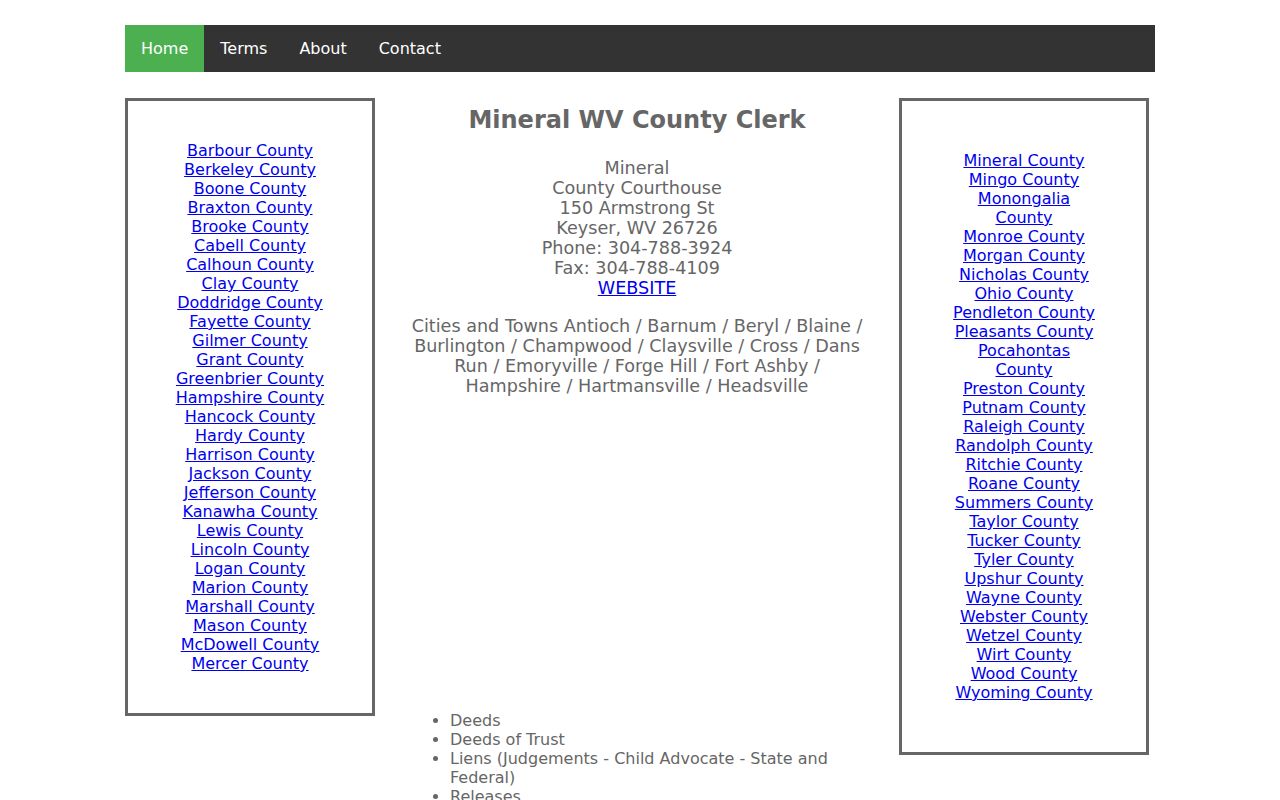 shows the document category landing page. Confirm exact coverage with the office before relying on an empty result.
Walking the Mineral County Deed Chain Backward
A deed chain is a backward search through recorded grants, not a list of everyone who ever lived in a house. Find the current deed first. Then search each grantor as an earlier grantee. The chain moves one step at a time. The legal description should stay consistent, or the deed should explain how a larger tract was split, combined, or described under an older name.
- Search the present grantee and note the recording reference and description.
- Search the grantor from that deed as the prior grantee.
- Check the same parcel by metes and bounds, plat, acreage, or adjoining tracts.
- Record each transfer in order and ask the Clerk for paper volumes at the web cutoff.
- Grantor / grantee
- Transferor and recipient named in a deed.
- Chain of title
- The ordered links from an earlier recorded owner to a later one.
- Legal description
- A written land description that may stay useful after a street or parcel number changes.
The chain can hold surprises. Some deeds are not sales. An estate or fiduciary transfer, a correction, or a release can shift the name or interest without showing a market transaction.
Mineral County’s 1875 Sketch Helps Locate Old Land
WV Archives lists an 1875 Mineral County land sketch. It also holds the 1941 Inventory of the County Archives of West Virginia, No. 28. Both are research aids, not deeds. Each can orient an older tract or point to the book series worth requesting. The bibliography also names old roads, houses, local businesses, and the F&M Bank building in Keyser.
The WV Archives Mineral County bibliography identifies the sketch and the inventory. Deed-book ranges remain a question for the Clerk. Include both a modern parcel number and the historic description when you make the request.
See the Mineral County archives finding aid for supporting context. 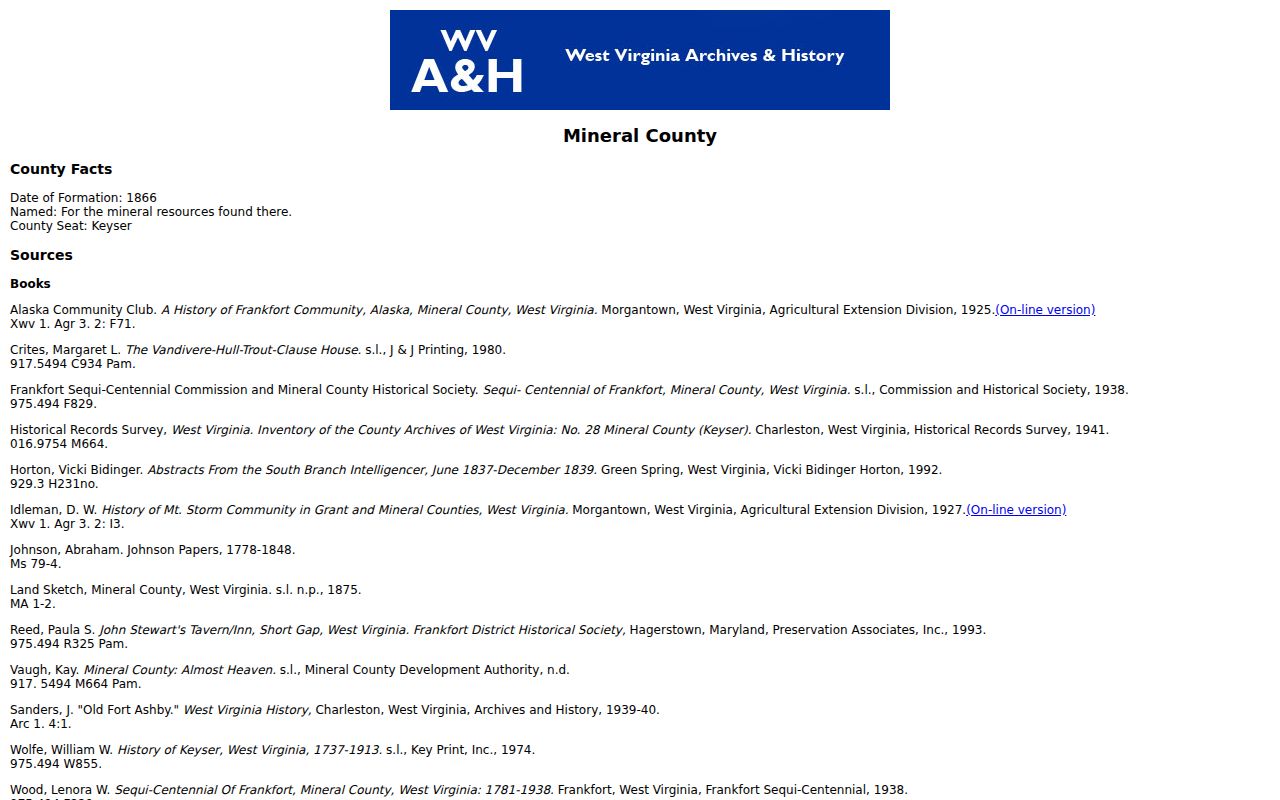 shows the county archive list. It can point the search toward a record, but does not substitute for the recorded instrument.
Mineral County Microfilm Connects Names to Streets
WV Archives holds rich Mineral County microfilm. Mountain Echo and Our Mountain Messenger fragments begin in July 1876. Keyser Tribune fragments cover 1885 and 1903, plus a later run. Mineral Daily News titles date from the twentieth century. The Piedmont Herald runs from 1890 through 2006 with gaps, and Pythian Banner issues span 1905 to 1912. The coverage table marks specific holes. A missing notice may simply reflect a reel gap.
Newspapers mention construction, sales, estate notices, fires, street names, and subdivision announcements. They bridge names to streets. They do not prove a deed, though. Search the WV Newspapers Portal at Potomac State for digitized regional material, and check the West Virginia Archives newspaper table for the Mineral County microfilm years and gaps.
See the WV Archives newspaper coverage for supporting context. 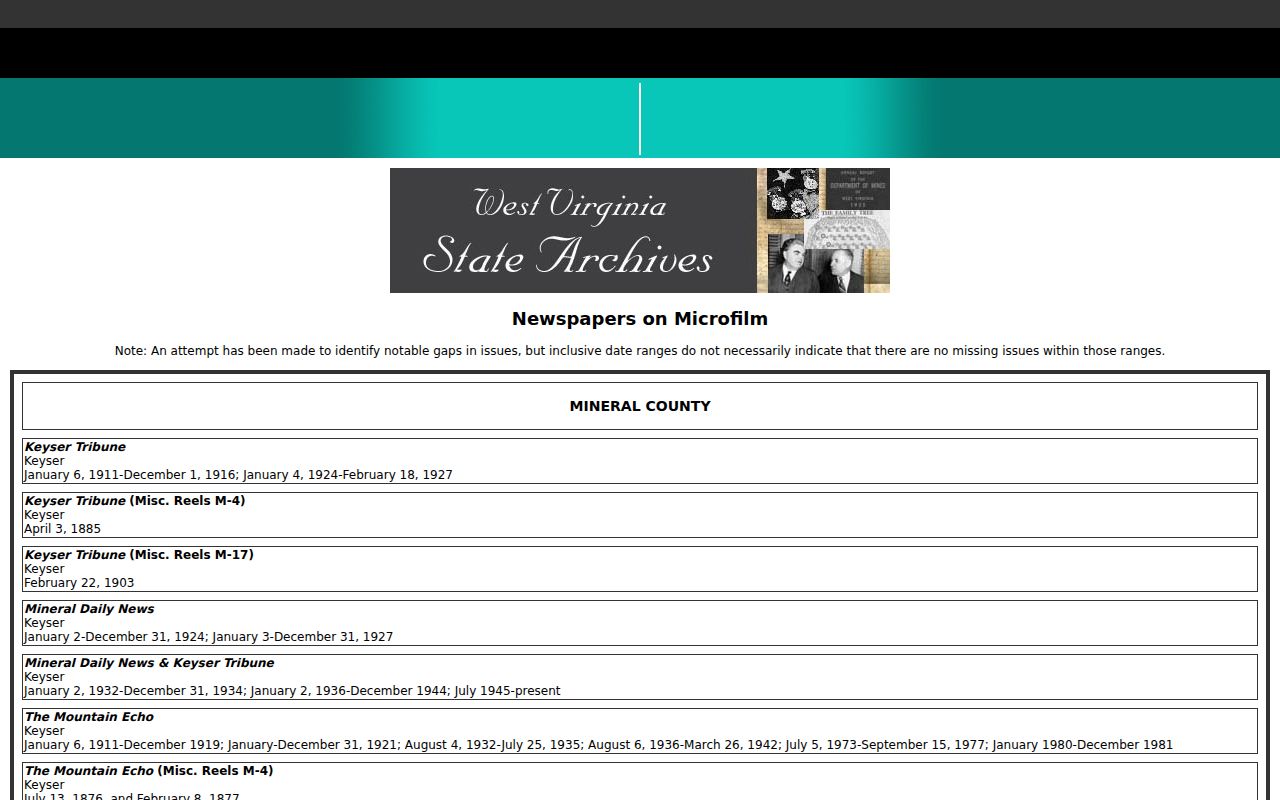 provides the coverage list used to target a historic date range.
Mineral County Genealogy Collections Add Clues
The J.C. Sanders Papers are held at the Keyser-Mineral County Public Library. They hold Mineral County data, genealogy, early history, deeds and wills, family histories, and vital-record compilations. Potomac State College adds its Evelyn Bane Mineral County Genealogy Collection, plus local school yearbooks. The WV Newspapers Portal rounds things out. It carries names tied to regional events and organizations.
These collections are strong for tracing a relative. They also help with a spouse, an estate, or an old family name. Treat a newspaper name as a lead only. A genealogy chart is not a deed. The person in a notice may not be the owner of record. Confirm the actual transfer in the deed records or the probate file. The library offers $0.20-per-page copies, free computer access, and interlibrary loan. Ask about terms for a specific item.
Potomac State's local collection page describes the local history and digital resources.
See the Potomac State community resources for supporting context.  offers another path from a former resident’s name to a historic address or deed clue.
Mineral County Probate Explains Estate Transfers
Probate records explain how a deceased owner's land moves. The Mineral County Clerk records wills, appoints personal representatives, and handles appraisements and settlements. The office also advertises creditor claims. A deceased owner's chain may include an appointment, will, appraisal, settlement, and an executor or administrator deed. Later deeds to heirs often finish it.
Search probate and land records together. A probate order or death record explains why a name changes, but the instrument that conveys the land is still the deed. An obituary can point to heirs or an old address, so check it against the fiduciary deed and the parcel description. Certified vital records follow separate state eligibility rules.
Ridgeley’s Older Chain May Say St. Clairsville
Ridgeley was not always Ridgeley. The town's official history says it was first known as St. Clairsville. It incorporated as Ridgeley on November 28, 1914. So an older deed, map, or newspaper item may say St. Clairsville or a surrounding land description instead of the current town label. Search both names within the historic area.
The name change is a clue. It does not prove the parcel moved, and older documents do not all use one name, so compare the grantor, grantee, parcel description, and plats against any Ridgeley municipal records. Postal Ridgeley addresses can also reach county land beyond the corporate line.
How Far Back Mineral County Ownership Records Go
Mineral County was organized in 1866. The county publishes no complete online deed-book index or cutoff year for its oldest records. Archives finding aids from later years include an 1875 land sketch and a 1941 inventory. The Clerk remains the first stop for old deed books and grantor-grantee indexes. No courthouse fire or flood loss marks these records. So do not assume any decade was destroyed.
House history and due diligence. Trace former owners for a lawful property, family, or title-history purpose. Do not use a past owner’s name or address to track or harass a living person.