
What the Mineral County Current Owner Record Shows
Mineral County keeps its current owner data in the Assessor's annual roll. That entry is where most lookups begin. The label is helpful. It is not a live deed feed, though. A deed recorded after the latest refresh may not show up yet. The roll can trail a recent sale. The assessment also splits a physical property address from the owner's mailing address. A summary line may list just one name. Anyone who wants to search Mineral County property records by address should open the detailed card, note the parcel key and tax year, and compare the newest recorded deed when the transfer date matters.
| Current Owner | Name shown in the assessment summary; detail can include co-owners |
|---|---|
| Property Address | Physical or situs location associated with the parcel |
| Mailing Address | Owner correspondence address, shown in the detailed view |
| Root Parcel ID | County/district/map/parcel pieces that link map and assessment |
| Property and Tax Class | Classification fields for the assessment record |
| Appraisal Values | Building, land, and total appraisal fields |
| Deed Book and Page | Search fields that can point to a recorded instrument |
The current owner field names the person or entity on the roll. It does not prove who occupies a building. A physical address and a mailing address are separate data points, and the mailing address can belong to an agent, a company, or a post office box. Use the parcel ID and deed to confirm the land behind the name.
Mineral County Owner Entries Come From Annual Books
The Assessor discovers, lists, and values property every year. The fiscal year opens on July 1. The books close June 30 of the following year. State assessment data refreshes when the new tax assessment is released. The current owner field is therefore current to a roll cycle. It is not a live deed feed. For a parcel transferred between July 1 and June 30, the state says changes are due by February 1 of the next calendar year. A plain sale with no new parcel lines can still be missing from the public viewer. If a parcel's lines sit unchanged after two years, state guidance says to contact the local Assessor. Keep the deed recording date and the assessment refresh date side by side. That way the lag stays visible. Mineral County's online roll is a strong first record but not always the newest one. A buyer or seller may hold a recorded instrument before the next annual owner label appears.
Mineral County Owner Search Shows the Detail Card
Set the county to Mineral in the WV Property Assessment Search. Then search by owner, street, or parcel. The form can filter appraisal ranges, deed book and page, and legal description. It also narrows by sale period, acreage, building year, and more. The summary row is built for quick review. The detail card is where multiple owners and the owner mailing address may appear. The public assessment form is free and requires no login. It caps a result set at 1,000 and offers CSV results. Avoid relying on a broad name search when several parcels share a surname. Open each result and match the property address, district, map, and parcel instead. The WV Assessment Search page exposes the Current Owner result. It also shows the fields used to narrow it. A result may list only one owner even when the card holds additional names.
See the MapWV assessment search for supporting context. 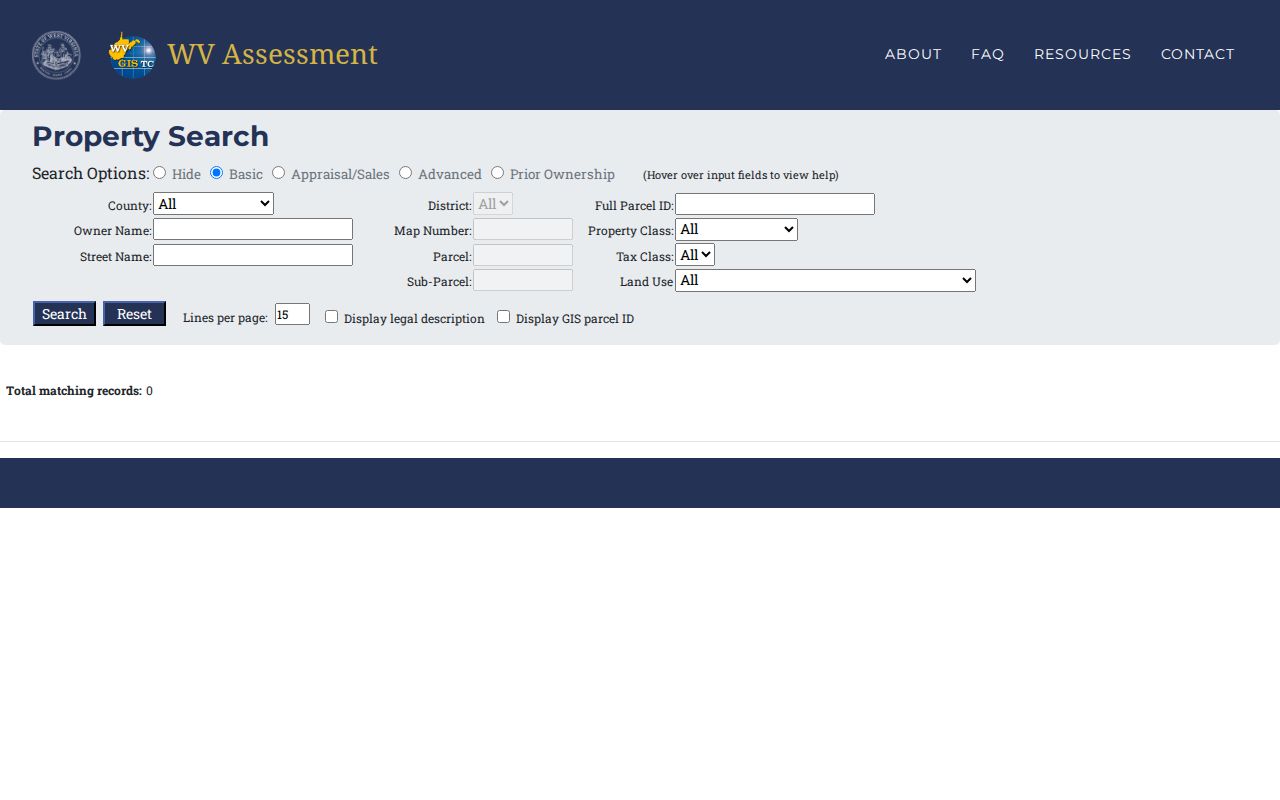 shows the assessment search before a parcel is opened. Use the owner field as an index clue, then inspect the detail.
Confirming the Current Owner in Mineral County
When a recent transfer matters, compare the roll with the newest deed. Do not wait on the annual refresh. The deed's grantee, recording date, legal description, and parcel clues show exactly what was filed. If the deed and the assessment disagree, record both dates. Then ask the Assessor when the roll will reflect the transfer. The deed is the more current evidence of a recorded change. The assessment remains the county's tax record of the parcel.
- Open the detailed assessment card and copy the Current Owner name, parcel ID, and Property Address.
- Search the County Clerk land index for the latest deed and compare its grantee and legal description.
- Check whether a later release, assignment, fiduciary deed, or corrective instrument changes the trail.
- Ask the Assessor about a roll update if the recorded deed predates the current owner field.
- Owner of record
- The person or entity named in the assessment or deed record.
- Vesting
- The way a deed names the grantee or grantees holding the interest.
- Registered agent
- A state-listed contact for an entity, not necessarily its beneficial owner.
- Recording lag
- The gap between a recorded transfer and its appearance in an annual assessment view.
The Mineral County deed record carries the recorded instrument itself. The broader owner-finding route starts when the address or parcel is not yet known.
Mineral County Summary Rows Can Omit Co-Owners
The assessment portal warns about its result rows. One owner and one address may display there. A detailed card is required for multiple owners or the mailing address. A deed may name spouses, multiple grantees, trustees, or an entity. Compare that deed with the full detail. Do not assume the first name is the only owner. West Virginia's property viewer also notes something similar. One owner and one physical address can appear when multiple cards or stacked parcels exist. Navigate each card and record the parcel key. Check whether the building or assessment detail belongs to the same unit or land piece. An incomplete summary may reflect a display limit, not a legal statement about ownership. For an older transfer, use the legal description and book and page reference. Address changes and lot splits can complicate matters. An earlier instrument may look unrelated until the plat and parcel are compared.
Mineral County Owner and Situs Addresses Differ
A property address and an owner's mailing address often point to two different places. The situs address marks where the land actually sits. The mailing address is where the assessor sends notices, and it can be anywhere. Keep both straight. The WV Property Viewer takes E-911 addresses but rejects rural-route and PO-box text. So a searcher holding only a bill or letter may need the owner field or the parcel number to locate the parcel itself.
Keyser serves as the county seat. Still, postal names like Keyser, Piedmont, and Ridgeley say nothing about town boundaries. A local permit, levy class, or annexation question may turn on corporate limits. Confirm those limits with the municipal clerk and GIS. The parcel's situs field and the deed description remain the best anchors for location.
Compare the selected Mineral parcel panel against the assessment card. That separates physical facts from mailing details.
See the selected Mineral parcel view for supporting context.  shows the viewer’s selected parcel detail. Use it as a cross-reference, not as a substitute for the deed.
Mineral County Entities Need a Name Match
An LLC or corporation sometimes appears in Mineral County property records. It may show up as the current owner. The West Virginia Secretary of State business search reveals its status and filing history. It also shows the registered office and registered agent. Those are solid identity clues. They still do not prove beneficial ownership. The recorded deed is the controlling document. Confirm the entity name and parcel number there.
Estates add another wrinkle. A fiduciary transfer or a temporary owner label can appear on the tax roll. This can happen while administration is open. Mineral County's Clerk handles wills, personal representatives, appraisements, settlements, and estate administration. An executor or administrator deed may convey the land after a death. When the roll carries an estate, trustee, or representative name, search the probate record. Search the land index together with it.
Never force a person's name onto an entity record. The owner of record is simply the legal grantee named in the document. Separate public filings may explain the entity's contact.
Mineral County Owner Records Have Privacy Limits
West Virginia public property data does not expose every personal detail. The assessment portal redacts telephone numbers and security alarm information. Public-record requests still face exemptions, court orders, and other statutes. Voter guidance likewise withholds Social Security numbers, driver's-license or state-ID numbers, telephone numbers, and email addresses.
Protection programs exist too. The West Virginia Address Confidentiality Program supplies a substitute address for qualifying victims of domestic violence, sexual assault, stalking, and human trafficking. Enrollment runs through an Application Assistant. If an address looks protected, or a record needs redaction, ask the custodian how to make the request. Do not repost the data.
Mailing details are fine for a legitimate parcel matter. They are not permission to threaten, stalk, or publish sensitive information about an owner of record.
Lawful use. Mineral County owner records support property due diligence, tax questions, and local history. Do not use an address or name to intimidate or harass anyone.